Load Cell Vs. Force Sensor
Engineers in many industries need reliable ways to measure compressive force, either during product development, or as an embedded component in a product or device. Load cells and force sensitive resistors are common force sensor technologies, but how do they compare?
A load cell is a type of force sensor that, when connected to appropriate electronics, return a signal proportional to the mechanical force applied to the system. They can be hydraulic, pneumatic, or, most commonly, based on strain gauges.
|
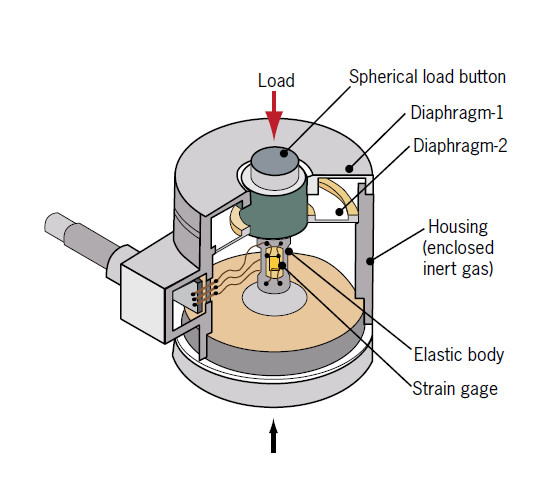 Typical Load Cell Typical Load Cell
|
Advantages of a Typical Load Cell
- Very accurate (<0.1% of full scale)
- Readily available
- Calibrated by manufacturer
Disadvantages of a Typical Load Cell
- Bulky in size and rigid construction
- Costly signal conditioning electronics
- Not a good solution for OEM/Design-in applications
|
There are other types of force sensors available, such as force sensitive resistors (AKA, piezoresistive force sensors, or touch sensors) which measure force differently. A force sensitive resistor measures a compressive force directly instead of correlating the strain of a beam to force applied. The force applied to the sensor compresses two layers of a flexible, printed, piezoresistive ink together. This compression results in a proportional change in electrical signal, which like the signal of a load cell, can be calibrated to engineering force units.
|
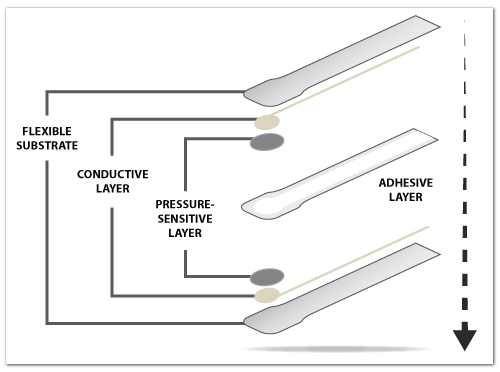 Force Sensor Construction Force Sensor Construction
|
Advantages of a Force Sensitive Resistor
- Very thin (0.2mm) and flexible construction allows for unobtrusive measurement
- Readily available
- Inexpensive signal conditioning electronics
- Great solution for OEM/Design-in applications
- Customizable
- Ideal for innovative product design - thin, light weight, low power requirements
Disadvantages of Piezoresistive Force Sensor
- Less accurate (±5% full scale) than typical load cell
- Calibrated by user
|
Does your product or application require force sensors?
Whether you are looking for an embedded sensor for an OEM application, or you need a force sensor for test and measurement purposes, there are a number of factors to consider in choosing the right technology. Our free whitepaper details the differences between the key technologies on the market..
Read Whitepaper Now
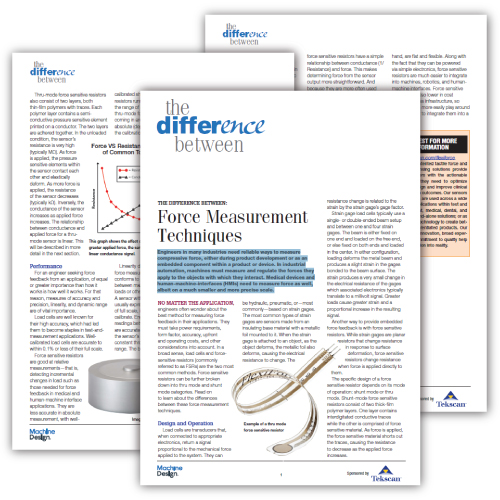
The Difference Between Force Measurement Techniques
Source URL: https://www.tekscan.com/resources/whitepaper/load-cell-vs-force-sensor
List
https://www.tekscan.com/resource-type/whitepaper
https://www.tekscan.com/resources/articles-research/difference-between-force-measurement-techniques
https://www.tekscan.com/resources/articles-research/difference-between-force-measurement-techniques
https://www.tekscan.com/resources/articles-research/difference-between-force-measurement-techniques