Tactile Touchpoints

What's a key difference between ordinary products and smart products? Smart products have senses. Many of today's smart products can see and hear - but what can the sense of touch do to better serve the end user? By sharing real-world cases and idea-generating concepts, Tactile Touchpoints aims to inspire engineers of the world's smart products to consider how embedding tactile force sensors can create new outlets for advancement in their respective markets.


In the summer of 2018, we submitted a survey to 373 members of the global design engineering community to understand what was most important when selecting a supplier of embedded components. We will be sharing our key findings over a two-part Tactile Touchpoints article series. Question: Rank these...

No matter if your force-sensing application will endure more than a million actuations or just a few touches over its service life; validating sensor durability is a long and costly process for OEMs. One of the inherent values of using force-sensitive resistor technologies in an embedded application...

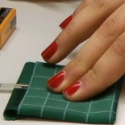
Pressure sensor pads are electronic devices that capture physical force contact to generate some sort of a response. There is a truly endless amount of applications for pressure sensor pads, ranging from an input mechanism in a human-machine interface (HMI), a method to capture intruders in a force...

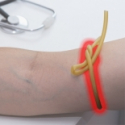
Whether for treating an injured individual, or as something simply done ahead of drawing blood from a patient for lab analysis, tourniquet wrapping technique is an important skill used across a wide range of medical professions. It requires keeping a safe a balance between applying enough force to...

Didn't make it out to Sensors Expo this year? Our CTO Rob Podoloff was interviewed by Embedded Computing Design at our booth, sharing the basics behind Tekscan and FlexiForce technology, and observations on market trends. Check out the short video below: Visit this page for more upcoming events...

Whether it’s an intruder entering a facility after hours, or items in storage mysteriously disappearing over time, these measurable force exchanges can be an indication of foul play. It takes a minimally-invasive force-sensing technology to create a unique security system that can measure these...

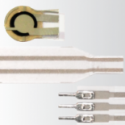
One of the more common questions we receive is around the topic of connecting (AKA, terminating) FlexiForce™ sensors. Even though our Standard Sensors are connected with crimped pins (shown below), design limitations -- such as budget, or space within a device -- may require you to consider...

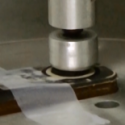
Tekscan Applications Engineer Ed Haidar is back with another helpful tip to keep in mind while testing FlexiForce™ sensors. Over the years, one of the more common questions we’ve received from customers who have tried our standard FlexiForce™ sensors is on the topic of sensor repeatability. In many...

Tekscan Application Engineer Ed Haidar is back with more helpful tips for integrating FlexiForce™ touch sensors into a product or device. One of the key benefits of FlexiForce touch sensors is the fact that they can be calibrated by following a simple and fast three-point calibration procedure. As...

The embedded technology investment includes several different direct and indirect costs beyond the sensor purchase itself. Direct costs refer to any money exchange to purchase technology or materials, while indirect costs refer to the time and expense associated with designing the technology into...