Tactile Touchpoints

What's a key difference between ordinary products and smart products? Smart products have senses. Many of today's smart products can see and hear - but what can the sense of touch do to better serve the end user? By sharing real-world cases and idea-generating concepts, Tactile Touchpoints aims to inspire engineers of the world's smart products to consider how embedding tactile force sensors can create new outlets for advancement in their respective markets.
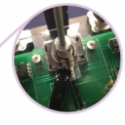
For designers and engineers, the measures taken early in the sensor integration process can make a significant impact in the later design phases. While some embedded components companies provide collateral and documentation validating sensor performance, always keep in mind that every application is...

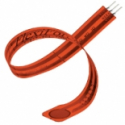
Ultra-thin force sensors - like FlexiForce TM sensors - are a useful embedded component for integration into smart, force-sensitive devices. Their thin and flexible properties allow the ability to fit into tight spaces within a design. However, depending on the expectations of your application, you...

Thin linear potentiometers, or position sensors, are a unique component used to correlate the specific position of an actuator, physical contact, or touch to the sensor’s output. When physical contact is applied to the conductive area, the electrical output of the sensor varies with respect to the...

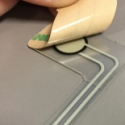
Printed, thin, and flexible sensors have caused quite the buzz around the design engineering community in recent years. This is due largely to the boom of smart, lightweight, and power-efficient technologies, which have become entrenched in our everyday lives. Naturally, when designing these compact...

Ed Haidar, FlexiForce Product Manager and Applications Engineer, shares a story on how he helped a customer use Flexiforce sensors to correlate a change in voltage to a change in force -- otherwise known as a Relative Measurement Approach. For many devices or designs embedded with FlexiForce sensors...

FlexiForce sensors are a design-engineer-friendly embedded technology due in large part to their thin and flexible form factors. This allows them to be embedded into tight space constraints that can be challenging for other force-sensing technologies. Naturally, when embedding FlexiForce sensors...

Fighting Back with the Power of Fun The story of a proactive father and his creative inventions that train his son to persist through the challenges of cerebral palsy. Meet Julian Nine years ago, Marc Gunderson’s son Julian was born three months prematurely, weighing just 1 kg (2.2 lbs) at birth...

This is the second of a two-part Tactile Touchpoints blog series summarizing the findings from a survey submitted to 373 members of the global design engineering community. The goal of the survey was to better understand what was most important to design engineers when selecting a supplier of...

The following is an independent 3rd-party study of High-Temperature FlexiForce sensor performance in their most extreme durability test to date. The complete citation can be found at the end of this article. FlexiForce™ sensors have shown the ability to maintain linearity and performance after over...

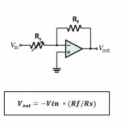
Here's another question we frequently receive from our customers - what is the recommended circuit to drive a FlexiForce™ sensor in an embedded design? If you've browsed our standard FlexiForce sensors recently, you’ll notice that we recommend an Inverting Op Amp circuit. However, it is possible to...