Applications

Pressure, Force and Temperature Measurement Applications

Tekscan's force, pressure, and temperature sensors and measurement systems are used in a wide variety of OEM, Research and Development, and Clinical applications. If you don't see your application listed below, contact us to discuss the opportunity.

Displaying 11 - 20 of 35
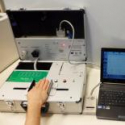
Smart Ambulatory Device designed with FlexiForce™ Sensors Background: According to the present edition of World Population Ageing, globally, the number of older adults (aged 60 or above) is expected to more than double from 841 million people in 2013 to more than 2 billion in 2050. This increase...

FlexiForce™ Sensors Improve Hand Rehabilitation Device In 2013, a group of bioengineers and rheumatoid specialists in Cagliari, Italy designed a low-cost medical device that monitors the hand rehabilitation of patients diagnosed with Rheumatoid Arthritis (RA) and Systemic Sclerosis (SS). The device...

Quantify Grip Forces with FlexiForce™ Accurate grip measurement has become increasingly important in today’s world of continued ergonomic improvement and robotic grip applications. Historically, there have been limitations with grip measurement. Load cells are expensive and bulky; pressure films...

Speech Pathologists Track Progression of Patient’s Speech Therapy with FlexiForce™ Traditionally, speech pathologists evaluate the health of orofacial muscles by asking a patient to contract their tongue against an imposed object, such as a gloved finger. In recent years, pathologists have sought...

Tactile Feedback in Surgical Applications In recent years, robots have become an increasingly viable part of minimally invasive surgery. They offer improved range of motion in laparoscopic techniques. The drawback has been that robots have lacked the sense of touch, or haptic feedback, that is so...

FlexiForce™ Sensors Enhance Robotic Surgery Due to advances in biomedical engineering, robotic surgery has become increasingly popular. One significant disadvantage of robotic surgery; however, is the lack of haptic technology and inability to provide force feedback to the surgeon. Because many...

Studying Muscle Forces in the MRI Environment Mag Design & Engineering (MD&E) prototypes devices that researchers use to study human brain function and human bone joints. Their services range from computer hardware configuration and assembly to image processing to statistical analysis. MD&E is using...

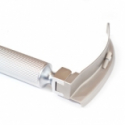
Video-Assisted Intubation Assessed Using Force Sensors Background: In difficult intubation situations, there is a risk of damage to soft tissues of the mouth and to the patient’s maxillary incisors. Modern video laryngoscopes provide an easier view of the area of the larynx where the vocal cords are...

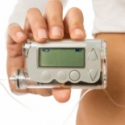
Infusion Pump Blockage Notification Using Force Sensors Background: Automated, wearable pump systems continuously deliver vital drugs to the user. A crucial design consideration for such devices is a sensor that will detect life-threatening blockages in the system and alert the user in time to take...

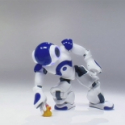
How does the right force sensor improve robot design? Robots in any industry, from consumer devices to manufacturing applications, must be able to sense whether or not a contact has been made, and/or how much force occurs during a given action. Force Sensing is Vital to Proper Balance Humanoid...